

What fence type works best for offices, warehouses, and retail properties?
The best commercial fence depends on how the property operates every day. Offices usually need a professional look with controlled entry, warehouses usually need stronger perimeter security and reliable vehicle access, and retail sites often need selective fencing that protects service areas without making the property feel closed off. In many cases, the strongest answer is a fence system that combines the right material, gate type, and access control for the site.
No single material fits every business property. Chain link, ornamental metal, privacy fencing, and heavier security-focused systems all have a place within commercial property fencing options, but the right choice comes down to visibility, deterrence, traffic flow, delivery access, employee entry, and maintenance burden. A municipality, an HOA, or site conditions can also shape the final recommendation.
Choose ornamental metal if appearance and sightlines matter most. Choose chain link if you need practical perimeter coverage over a large area. Choose privacy fencing where screening is the main goal. Choose a security-focused system if perimeter security and controlled access carry the most weight. Gates, hardware, and any automatic gate operator often matter just as much as the fence line itself.

Commercial and Industrial Fence – Chain link perimeter fence surrounding warehouse yard – Sample Image
What Is Covered In This Article
Offices: Fences That Balance Appearance, Access, and Light Security
Office properties usually need boundary definition without an industrial look. Visitor entry, parking control, and tenant expectations often matter as much as basic deterrence, which is why the best fence for office buildings is often one that looks clean from the street and still supports controlled access.
An ornamental metal fence is a common fit for office property fence options because it keeps sightlines open and gives the property a professional appearance. Aluminum works well where a low-maintenance finish is a priority. Steel can make sense where a heavier feel or added strength is preferred. Both can pair well with a pedestrian gate and an access control keypad at employee or service entries.
Chain link can still work on office sites, especially around rear lots, utility areas, or less visible property edges. Front-facing areas usually call for a more polished look, so chain link often feels better suited to secondary zones than to the main frontage.
Privacy panels also have a place on office properties, especially around dumpsters, side yards, and service spaces that do not need public visibility. Screening in those areas can clean up the overall appearance of the site without blocking the open feel of the front perimeter.
A strong office fence plan usually separates public-facing areas from back-of-house functions, which gives the property a more orderly layout from the first glance.
Warehouses: Fences Built for Perimeter Security, Durability, and Vehicle Access
Warehouse sites usually prioritize function first. The best fence for warehouses often needs to define a large perimeter, hold up under hard use, and support truck traffic without slowing down daily operations.
Chain link fence for commercial property remains a practical standard for many warehouse and industrial perimeter fence projects. It covers long runs efficiently, keeps visibility high for perimeter monitoring, and works well where loading dock access and truck clearance matter. Open mesh also reduces blind spots, which can be useful for both site supervision and after-hours observation.
Some warehouse security fencing projects call for more than standard chain link. Heavier-gauge framework, anti-climb design features, or added deterrence at the top of the fence may be appropriate on sites with elevated access concerns. Commercial and industrial zoning, site use, and internal security policies often shape that decision.
Gate planning carries extra weight on warehouse properties because frequent cycles create wear. A sliding gate or cantilever gate often fits better than a swing gate where truck traffic is constant or where driveway space is tight. Automation can improve uptime, but the operator, track conditions if used, and access control system all need to match the volume of daily use.
Post depth, footing size, and hardware quality matter more on large sites than many buyers expect. Long fence runs, repeated gate movement, and heavy-duty framework all put pressure on the system over time, especially on lots with uneven grades or drainage issues. Perfect Fence installs and repairs fences, gates, and railings across the Kansas City metro on both the Kansas and Missouri sides, and that kind of local work tends to reinforce one point clearly: warehouse fencing performs best when the perimeter, gate, and access plan are treated as one operating system.
Retail: Fences That Protect the Site Without Making It Feel Closed Off
Retail fencing is often targeted instead of site-wide. The best fence for retail property usually protects rear access, service yards, and storage areas while keeping storefront visibility and pedestrian circulation comfortable for customers.
Customer-facing frontage often benefits from ornamental metal instead of chain link. Open pickets preserve sightlines, support a cleaner appearance, and define the property without making the entrance feel defensive. That balance matters on shopping centers and standalone storefront properties where curb appeal and visibility affect the customer experience.
Back-of-house areas have different needs. A service yard, dumpster enclosure, or delivery zone may benefit from privacy fence sections or screening panels that hide operational clutter from public view. Shared parking and tenant mix can also influence placement, especially on multi-tenant retail center properties where one area needs screening and another needs open access.
Delivery access deserves its own planning. Gates should support the delivery schedule without interrupting customer movement, and rear access points should be wide enough and placed well enough to avoid awkward turns or blocked lanes. Property management teams often focus on the fence material first, but the gate location can have a bigger effect on how the site actually works on a busy day.
Retail sites usually benefit from fencing in the places customers do not need to think about, such as service corridors, storage zones, and rear lot edges.

Security Fence – Tall black welded mesh security fence for high security perimeter – Sample Image
Comparing the Main Fence Types for Commercial Properties
The main types of commercial fencing each solve a different problem. A commercial fence material comparison works best when you look at visibility, screening, deterrence, maintenance cycle, and fit by property type instead of asking which material wins in every category.
Chain link is often the practical choice for large perimeters. It offers visibility, scales well across long runs, and usually fits warehouses, utility areas, and rear commercial boundaries. Its appearance is more functional than polished, so it may feel out of place on a front office frontage or a customer-facing retail edge.
Ornamental steel or aluminum fence works well where appearance and open sightlines both matter. It fits office campuses, storefront-facing boundaries, and mixed-use commercial sites that need a professional-looking security fence without blocking views. Aluminum generally offers good corrosion resistance with lower maintenance, while steel can provide a heavier presence.
Privacy fence options are best where screening matters more than surveillance. Dumpster areas, service yards, side lots, and storage zones are common examples. Full privacy around an entire commercial site can create visibility issues, so this material usually works better in selected zones than across every property line.
Security fence systems are suited to sites with stronger perimeter concerns. Those systems may involve heavier materials, anti-climb details, and more controlled entry points. They are often chosen for operational reasons rather than visual ones, especially where access needs tighter control.
Mixed systems are often the smartest answer for office warehouse retail fencing. A property might use ornamental fencing at the front, chain link at the rear, and privacy screening around service functions. That approach matches the fence to site zoning instead of forcing one material to do every job.
Gates, Access Control, and Hardware: Why the Fence Is Only Part of the System
Gates are often the highest-use part of a commercial fence system. Many day-to-day problems come from underplanned entry points, including entry delay, gate sag, latch failure, and service calls tied to hardware that does not match cycle frequency.
Manual gates can work well on lower-traffic entries or secondary access points. Automatic gate for commercial property use makes more sense where employee entry, delivery traffic, or after-hours control happens often. The right choice depends on how many times the gate will open each day, how quickly vehicles need to move through, and whether controlled access is part of the site plan.
Common commercial fence gate options include:
- Swing gates for simpler openings with enough clearance.
- Slide or cantilever gates for tighter spaces or higher vehicle use.
- Pedestrian gates for staff, visitors, or controlled walk-in access.
Access methods also need to match the property. A keypad entry setup may work for smaller offices or service yards. Card reader systems can fit employee access on larger sites. Remotes, vehicle entry devices, and other access control for business property can support smoother traffic flow where cars or trucks move in and out all day.
Hardware quality matters because gates take concentrated wear. Hinge strength, latch design, operator sizing, and safety loop placement all affect reliability. Power access also needs planning early, especially for automatic systems on long driveways or remote perimeter entries.
A fence line may define the boundary, but the gate determines how the property actually functions hour by hour.
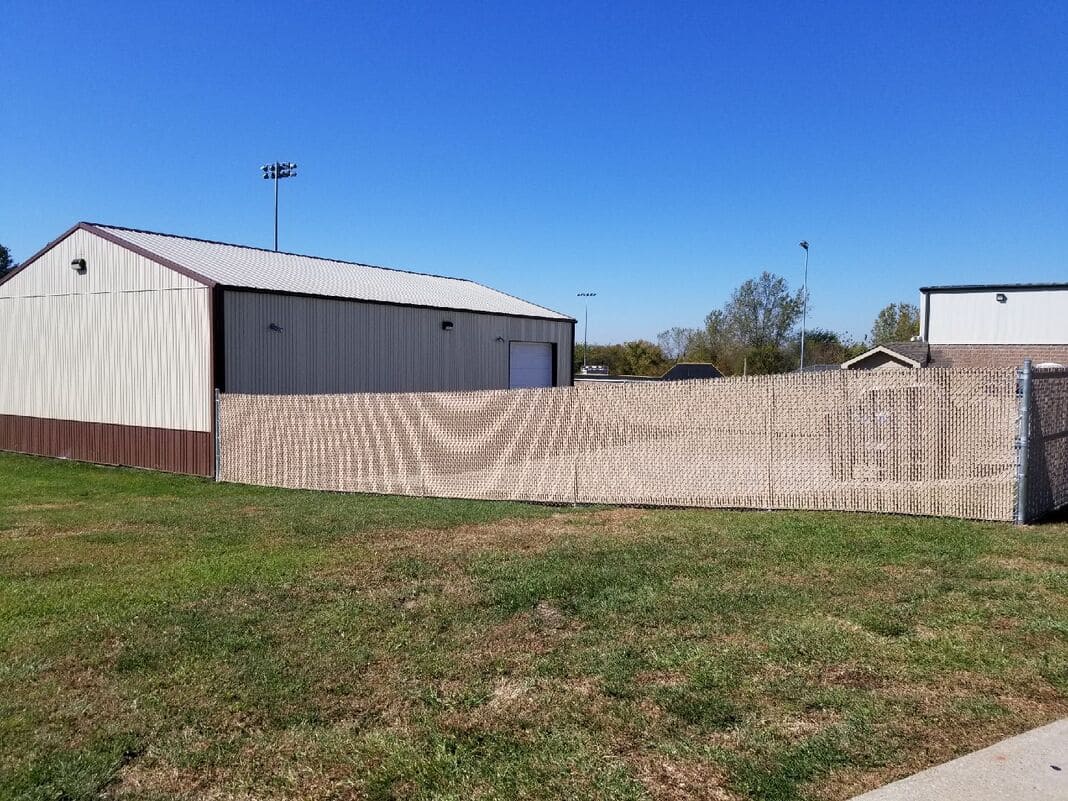
A photo of a chain link fence with privacy screening around a grassy commercial area
What Affects the Estimate and Installation Plan
Commercial fence cost factors go well beyond material choice. Two projects with similar fence types can have very different scopes once footage, terrain, access, and gate challenge are accounted for.
Key estimate drivers usually include:
- Linear footage and fence height
- Material grade and framework strength
- Slope, drainage, and grade change
- Gate count, gate size, and automation
- Power access, trenching, and access control additions
- Demolition and removal of old fencing
- Equipment access and staging conditions
- Permit requirements, utility locating, and site plan review
A flat site with easy equipment access is usually simpler to install than a property with long runs, tight staging, and multiple grade changes. Drainage can affect footing depth and layout. Old fence removal can add labor and disposal needs before new work even begins.
Gate automation cost factors deserve separate attention because they can change both schedule and scope. Power availability, trenching distance, safety devices, operator size, and entry hardware all affect the installation plan. Property line confirmation and permit review can also shape timing, especially on larger commercial sites with multiple stakeholders.
Kansas City Considerations for Commercial Fencing
Kansas City commercial fencing has to perform through real weather and varied site conditions. The metro spans Kansas and Missouri, and that means municipal permitting, approval paths, and property requirements can differ depending on where the project sits.
Freeze/thaw cycles can affect footing performance, especially on sites with drainage issues or unstable soil conditions. Wind load matters on taller fences and gates. Humidity, sun exposure, and weathering can also influence material choice, finish performance, and hardware life over time.
Sloped commercial lots are common enough to deserve early planning. Slope adjustment affects panel layout, post spacing, and gate placement, particularly on long perimeter runs. A site that looks straightforward on paper can become more complex once grade changes and driveway geometry are measured in the field.
Gate automation may need extra coordination in the Kansas City metro because power access, safety devices, and turning space all have to work together. Requirements vary by city and HOA, and property management rules can add another layer on some sites. Perfect Fence works across both sides of the metro, where those differences can change the installation path even when two properties are only a short drive apart.
Local conditions do not always change the fence type, but they often change the details that make the system hold up well.

Commercial Gates – Sliding metal security gate for commercial property access – Sample Image
Common Mistakes When Choosing a Commercial Fence
Most commercial fence mistakes start in planning, not installation. A fence can be built exactly as specified and still be the wrong fit for the property.
- Choosing by appearance alone. A fence that looks right on paper may create blind spots, weak traffic flow, or the wrong level of screening once it is installed on an active site.
- Treating the gate as an afterthought. A property can end up with an access bottleneck if the gate width, operator, or entry method does not match daily use.
- Ignoring visibility needs. Warehouses may need open perimeter views, and retail sites may need storefront visibility that a full privacy layout would block.
- Underestimating maintenance and wear. Hardware, hinges, and gate operators often need more attention than buyers expect, especially on high-cycle entries.
- Delaying permit review or property line checks. Approval delay, site survey conflicts, and late scope changes can disrupt scheduling and create avoidable rework.
A calmer, more accurate selection process starts with site function. Once the property manager, contractor, or internal team maps how vehicles, employees, visitors, and deliveries move through the site, the right fence system usually becomes much easier to identify.
A Simple Way to Choose the Right Fence for Your Property Type
The right commercial fence system is the one that fits the property’s daily use. Material selection matters, but perimeter design, access planning, and site operations matter just as much.
Offices usually lean toward ornamental fencing, controlled pedestrian entry, and selective screening where service functions need to stay out of view. Warehouses usually need chain link or heavier security-focused systems with reliable gates that can handle truck traffic and frequent cycles. Retail properties often work best with a mixed-use approach that keeps the storefront open and attractive while securing rear access and service zones.
A simple decision guide looks like this:
- Choose for appearance plus access on office sites.
- Choose for durability, visibility, and gate performance on warehouse sites.
- Choose for selective placement and customer comfort on retail sites.
The best fence by property type is rarely about picking a single material from a catalog. A good result comes from matching the fence, gate, hardware, and layout to the way the property actually runs, with enough realism about maintenance, traffic, and long-term use to make the system fit for purpose.
